
Growing Beef Newsletter
October 2026, Volume 17, Issue 4
Heart Scoring Could Provide Insight on Cattle Health in Iowa
Randie Culbertson, cow-calf extension specialist, Iowa Beef Center
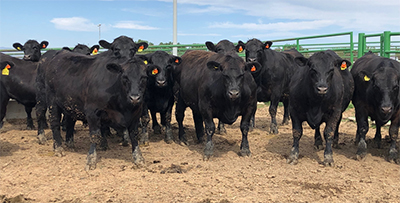 For decades, bovine congestive heart failure (BCHF) was known as high-altitude disease or "brisket disease," because it showed up mostly in cattle grazing well above 5,000 feet. Feedlots rarely reported it. That has changed over the last 15 years, and the change matters for cattle raised far from the mountains.
Feedlot death losses from heart failure have roughly doubled since the early 2000s. Cases are turning up at lower elevations, including in cattle that have never been to high altitude, so elevation is clearly not the only cause. Most of these deaths happen late in the feeding period, after months of feed, labor and investment have gone into the animal. Death loss may also understate the problem. When researchers examined hearts at packing plants in the Southern and Central Plains, they found that 20 to 35% of fed cattle showed some degree of heart failure at harvest.
What is a heart score?
To measure how common these changes are, hearts are scored at harvest on a scale of 1 to 5. A healthy heart (score 1) has a cone shape with a defined point at the bottom. A score 2 heart is still considered healthy but shows early changes: the right side of the heart is becoming more pronounced and the point is less defined. At score 3, the heart starts losing its cone shape as the right side grows larger than the left, and this is where the heart moves into the unhealthy range. A score 4 heart has rounded out completely, with no point and softening muscle. Score 5 is a heart that is flat and flaccid, with no muscle tone, and is typically fatal.
What we found at McNay
To begin exploring if Iowa cattle might be experiencing changes in heart morphology, heart scores were collected on 133 steers born in 2025 at the ISU McNay Research Farm. About 60% of steers had healthy hearts (scores 1 and 2), and the other 40% scored 3 or 4. No animals scored 5 which is typical. Animals with a heart scores of 5 almost always die in the feedlot and never make it to the kill floor.
These results come from one calf crop on one farm, so it is too early to make big conclusions. What the numbers do show is that the heart changes linked to BCHF are present in Iowa cattle, in a state where no farm comes close to the elevations where the disease was first described. Understanding the presence of heart failure does not mean the cause is easily identified, but it is a good first step.
Where this is heading
One thing we do know, is heart failure has a genetic component. This implies that breeding decisions could help reduce it. The American Angus Association is working to develop an expected progeny difference (EPD) that would let producers select for healthier hearts, and the data collected on the McNay research farm cattle will help build it. Scoring more Iowa cattle will also help answer basic questions for the region: how common is heart failure in Upper Midwest herds and what the implications of longer days on feed are to heart morphology?
This monthly newsletter is free and provides timely information on topics that matter most to Iowa beef producers. You’re welcome to use information and articles from the newsletter - simply credit Iowa Beef Center.



