
Growing Beef Newsletter
October 2026, Volume 17, Issue 4
Fall Weed Control in Pastures
Meaghan Anderson, ISU field agronomist
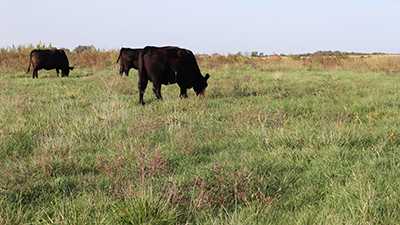 Fall is a great time for managing troublesome perennial and biennial weeds found in pastures.
Perennial weeds, like Canada thistle or horsenettle, survive multiple years and spread via underground root and rhizome systems. Biennial weeds will survive for all or part of two years, like musk thistle, wild carrot, and wild parsnip; these plants will be in rosette stage (their first-year growth), a circle of leaves with a large taproot. Both biennials and perennials will prepare for winter by moving their energy reserves from their above ground growth to their root system below ground. Fall is typically the best time of year to treat many perennial and biennial weeds, as long as the plant foliage is in good condition.
To help ensure the success with fall weed control of perennial and biennial weeds in pastures, follow the steps below:
- Scout your pasture to identify target weeds, their location, and the physical condition of their foliage.
- Some pastures may require a broadcast herbicide application while other pastures may only need spot spraying.
- For the herbicide to be effective, it is important to have healthy foliage that can absorb the herbicide. Some species, like horsenettle, may be in poor condition by fall and are better targeted during early flower.
- Target making herbicide applications on days with sunny conditions and when daytime temperatures are above 50-55 F.
- Herbicide treatments, especially those containing growth regulators, will kill legumes that have been interseeded with grasses.
- NovaGraz is a new plant growth regulator premix that can preserve white clover and annual lespedeza.
- Always read herbicide labels carefully to determine weeds controlled, appropriate rates, and any restrictions for areas treated with the herbicide.
When using herbicides, use care to choose one appropriate for the type of forage you are treating. Residues of certain products (picloram, clopyralid, aminopyralid) persist in the foliage of plants in treated areas and can be moved with forage/hay bales or in waste (e.g. manure) of animals consuming the forage. These herbicide residues can damage sensitive plants (such as soybean) if moved from the application area with forage or livestock. Check labels for specific information regarding grazing and haying restrictions, as well as slaughter restrictions, before applying any herbicide.
What happens if there is a frost before you can spray your pasture this fall? Herbicide applications can still be quite effective after one or even several frost events. However, it is important to pay attention to the principles above to create the best conditions for effectiveness, especially making sure weed foliage is in good condition and applications occur on warm, sunny days. Read more in this article “Effect of frost on pasture weed control.”
Finally, it is important to determine why the weeds are present in the pasture. We’ve had excellent pasture growth following high rainfall in the past two growing seasons. If your pasture is still plagued by summer and winter annual weeds like common ragweed, shepherds purse, yellow foxtail, and others, there are likely underlying issues that need to be addressed beyond the band-aid of simply controlling those weeds. Managing the forage stand so it is healthy and vigorous is a big part of managing weed pressure in pastures. This involves evaluating soil fertility, stocking rates, and determine the need for overseeding or interseeding to thicken up a forage stand. A 2021 article on pasture improvement discusses some considerations that would still be useful this fall and next spring. Herbicides can be valuable tools for improving pasture quality; however, they are not a substitute for good management practices.
This monthly newsletter is free and provides timely information on topics that matter most to Iowa beef producers. You’re welcome to use information and articles from the newsletter - simply credit Iowa Beef Center.



