
Timely reminders for cover crop turnout
3/30/26
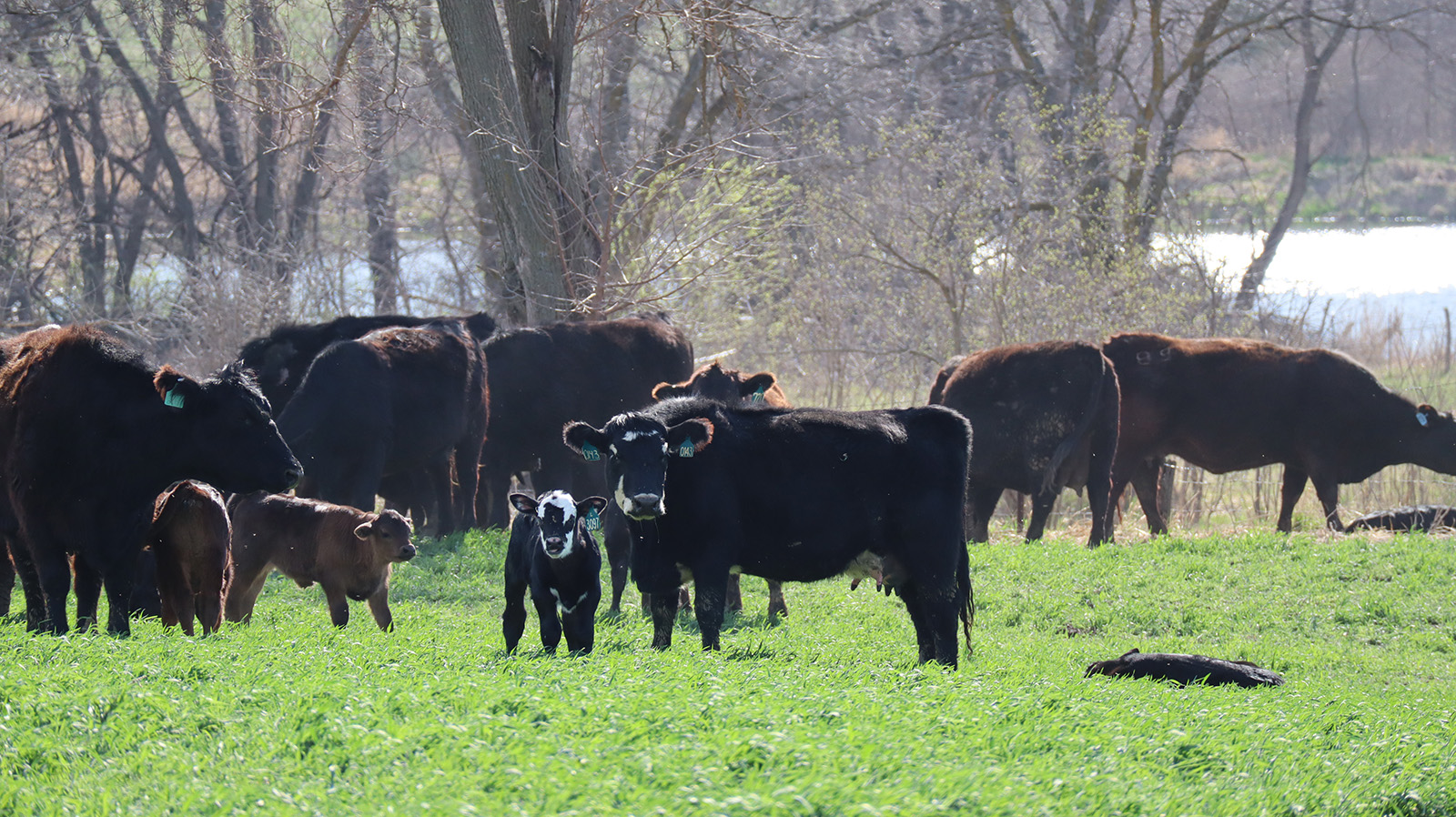
AMES, Iowa – Calves are on the ground and various cover crop fields are turning green. As cattle are turned out to these annual forages, it’s good to review some timely reminders. Iowa State University Extension and Outreach offers the following from extension field agronomist Rebecca Vittetoe and extension program specialist Beth Reynolds.
- General recommendations are to start grazing spring cover crops when the forage is 6-8” tall and actively growing, and to pull livestock off at about 4” of plant height if regrowth is to be grazed. Another common method to determine if forage is fit to graze without damaging regrowth potential is to delay grazing until the forage passes the “pluck test.” For the pluck test, take your thumb and forefinger and pinch the cover crop, as if you were a cow taking a bite and pull up. If you can pull the cover crop plant out by the roots, it’s too early to graze.
- Avoid grazing in wet conditions exist to minimize compaction concerns and to reduce damage to root structures in these conditions. Have a back-up sacrifice area available and remove animals if necessary. Move waterers and mineral feeders to discourage loafing areas.
- Strip grazing fields provides for better forage utilization if feasible. Rotational grazing will also increase utilization, but the short timeframe these forages are available to graze may reduce the practicality of a rotational grazing approach with multiple grazing bouts.
- After grazing, allow a week of regrowth before terminating the cover crop. Or you can plant green and apply an herbicide after to terminate. Remember to check labels and consider herbicide tolerances in crops.
- Supplementing other feeds may be helpful to achieve adequate intake for animals expected to graze the young, vegetative forage that is short, and rapidly passed through the digestive tract thanks to the high protein and moisture content.
- Nitrate and sulfur toxicity are some animal health concerns that may be associated with grazing annual forages. Be aware of conditions that can increase the risk of toxicity to determine if any management practices need adjusted.
Finally, remember to provide a mineral package to meet the nutritional needs of the cattle grazing annual forages. Cattle should already be on a high Mg mineral for a couple weeks before turnout, especially if lactating.
-30-
The Iowa Beef Center at Iowa State University was established in 1996 with the goal of supporting the growth and vitality of the state’s beef cattle industry. It comprises faculty and staff from Iowa State University Extension and Outreach, College of Agriculture and Life Sciences and College of Veterinary Medicine, and works to develop and deliver the latest research-based information regarding the beef cattle industry. For more information about IBC, visit www.iowabeefcenter.org.
Contacts:
Rebecca Vittetoe, ISU Extension and Outreach field agronomist, 319-653-4811, rka8@iastate.edu
Beth Reynolds, ISU Extension and Outreach program specialist, 515-294-9881, bethr@iastate.edu



